


By INKBANK R&D Team · Published August 2026 · Updated August 2026
What Is UV Ink?
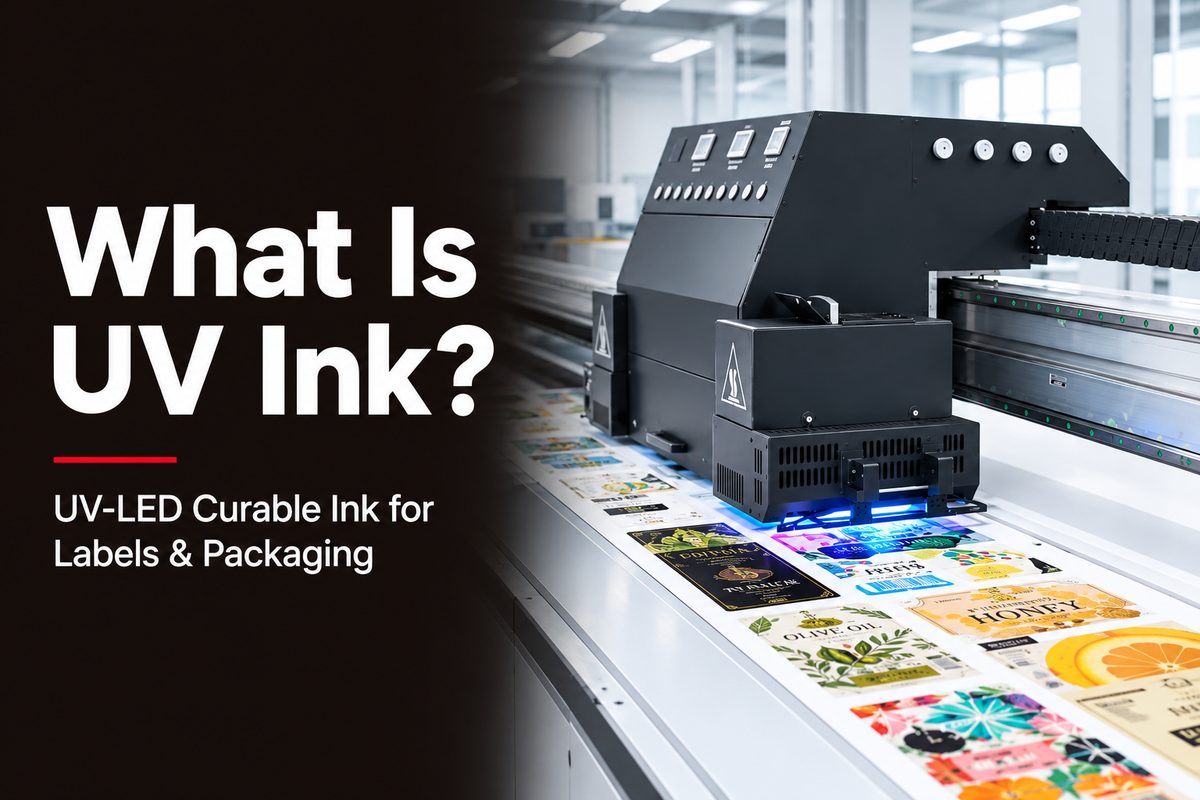
UV ink is a photopolymer ink that cures instantly when exposed to ultraviolet light, converting from liquid to solid through a chemical reaction called photopolymerization. UV-LED ink uses energy-efficient LED lamps instead of traditional mercury arc lamps, which lowers energy consumption, reduces heat, and enables compact inline curing for labels and packaging.
Because UV ink does not rely on evaporation, it can print on non-porous substrates such as PET, BOPP, PVC, PE, aluminum foil, and coated paper. This makes it one of the most important ink technologies for industrial label and packaging printing.
How UV-LED Curing Works
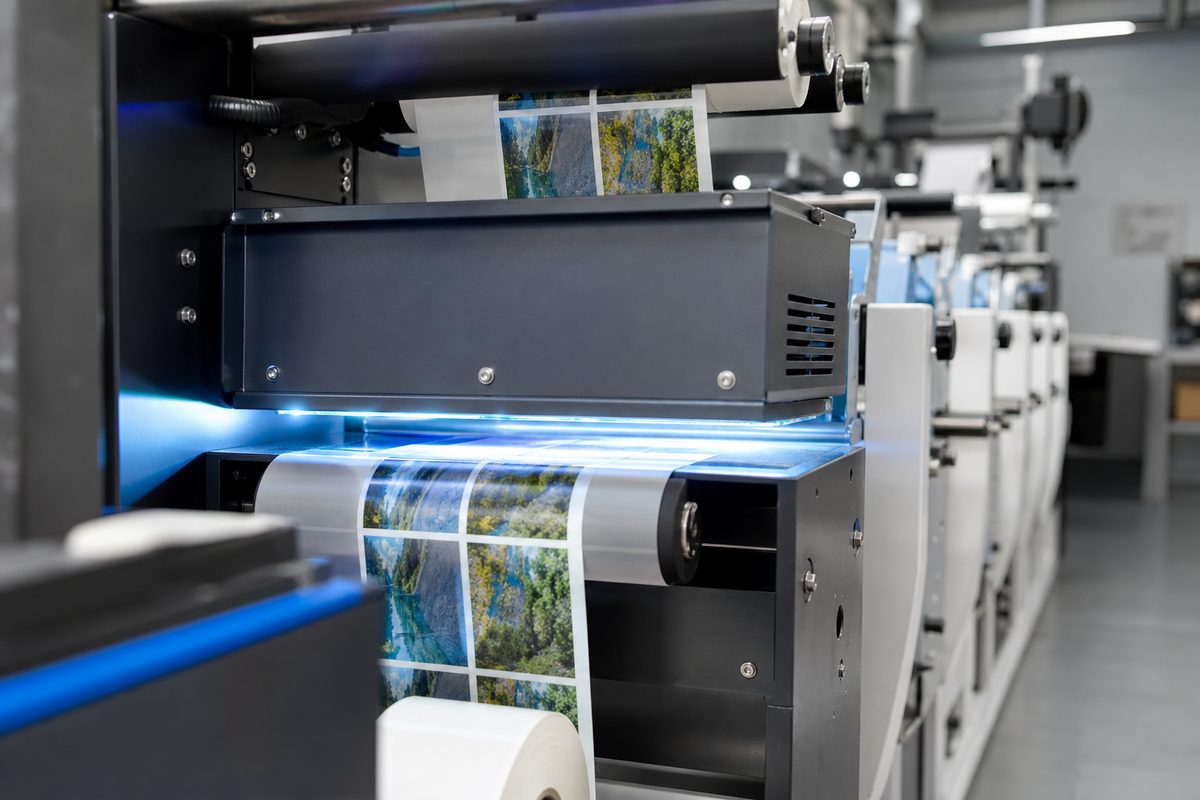
UV ink contains photoinitiators, monomers and oligomers, pigments, and additives. When UV light hits the ink, photoinitiators absorb the energy and trigger polymerization. The monomers and oligomers cross-link into a solid film in a fraction of a second.
In UV-LED curing, the LED emits a narrow wavelength range, typically 365-405 nm, matched to the ink's photoinitiator system. Because LEDs generate less heat than mercury lamps, UV-LED systems can be installed directly on narrow-web label presses without overheating heat-sensitive films.
UV Ink vs UV-LED Ink
| Factor | UV Ink | UV-LED Ink |
|---|---|---|
| Curing source | Mercury arc lamps | UV-LED lamps |
| Energy consumption | Higher | Lower |
| Heat on substrate | Higher | Lower, safer for films |
| System footprint | Large | Compact, easier inline integration |
| Lamp life | Shorter | Longer |
Types of UV Ink
Flexible UV ink: designed for media that bend or wrap, such as vinyl, banners, and flexible packaging.
Rigid UV ink: high-adhesion ink for rigid boards, plastics, acrylic, metal, and display graphics.
Label UV-LED ink: fast-curing ink engineered for narrow-web label presses and filmic substrates.
Coated paper UV-LED ink: for paper, cardboard, and packaging applications.
Corrugated board UV ink: for corrugated boxes and packaging applications.
UV DTF ink: for transfer applications and crystal/3D label effects.
Wallcovering UV-LED ink: low-emission formulation for interior decoration.
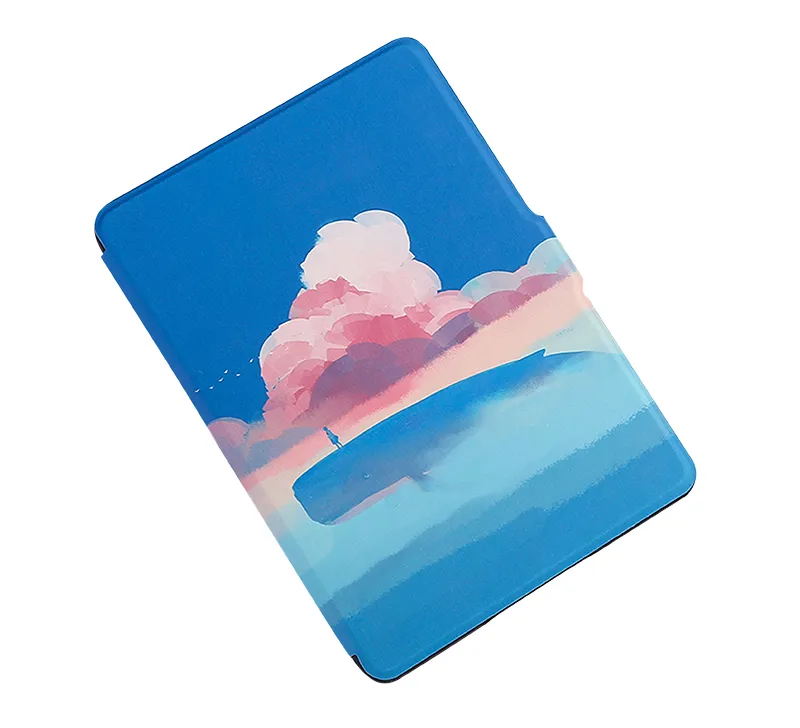 Flexible UV-LED Ink | 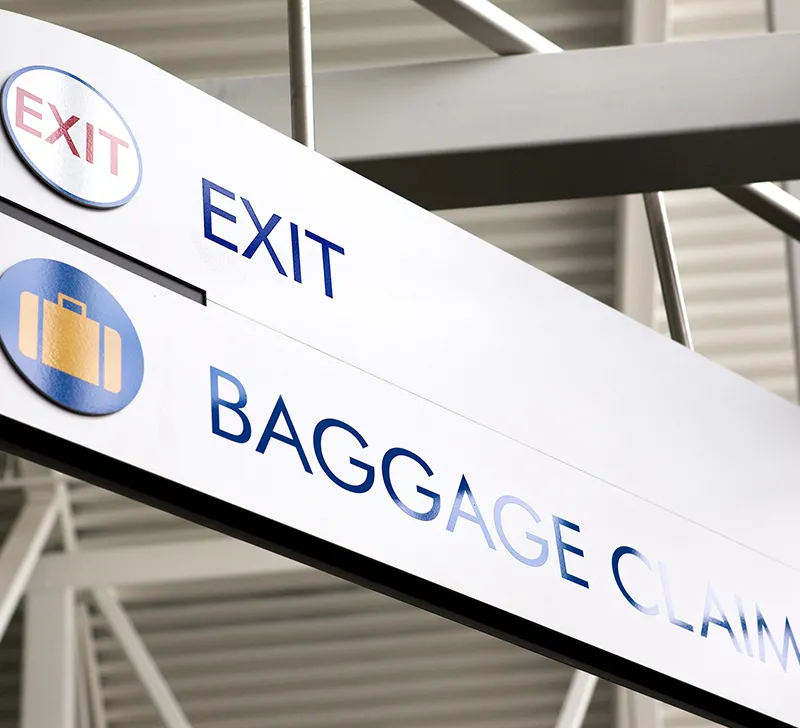 Rigid UV-LED Ink |
 Coated Paper UV-LED Ink | 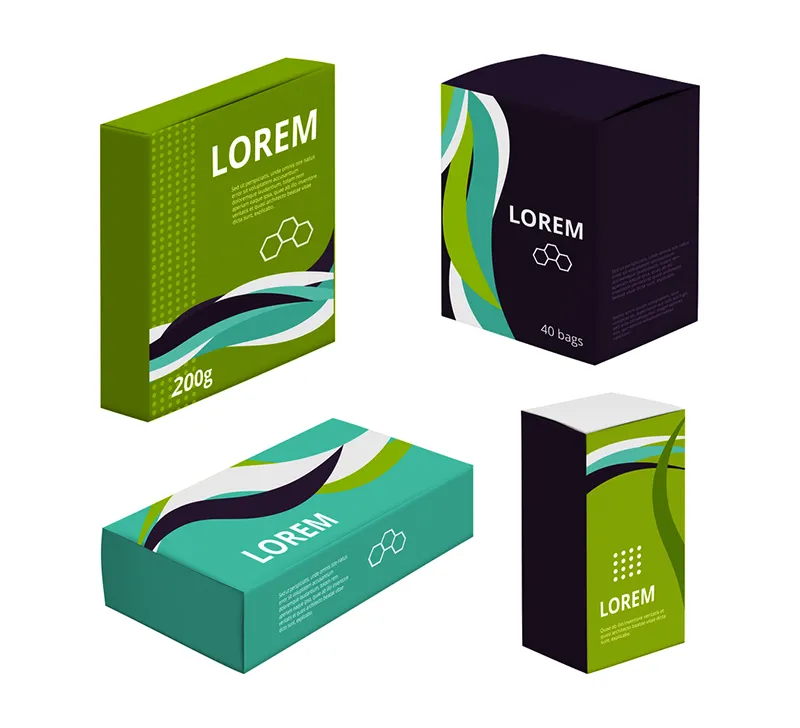 Corrugated Board Ink |
Label & Packaging Applications
UV-LED ink is widely used in corrugated boxes, inkjet synthetic paper, film labels, folding cartons, flexible packaging, and industrial labels. It enables high-speed inline production because the ink is dry the moment it leaves the curing station.
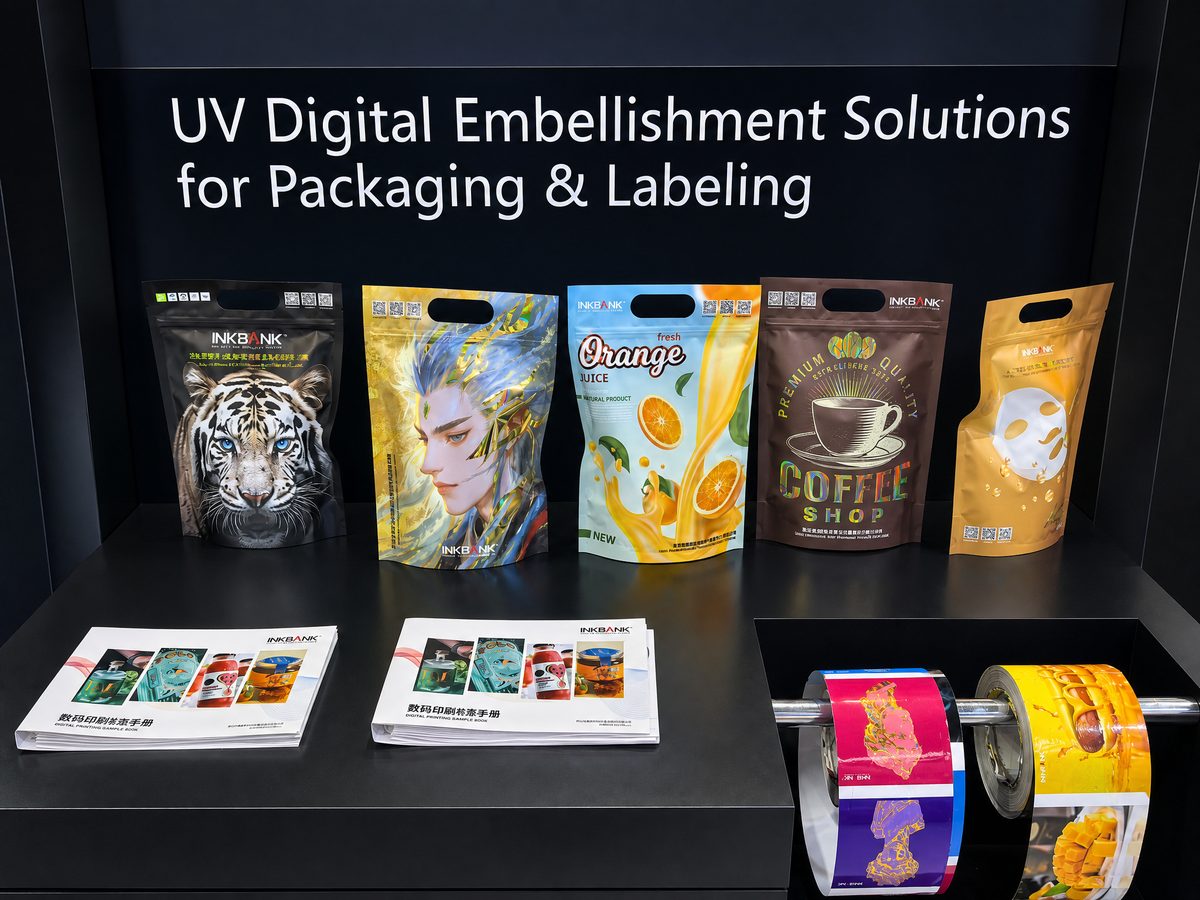
Pressure-sensitive labels and sticker rolls
Film labels and shrink sleeves
Folding cartons and paper packaging
Flexible film packaging
Corrugated boxes and packaging
Industrial and security labels
Premium product labels requiring high gloss or special effects
Compatible Substrates
| Substrate | Typical Use |
|---|---|
| PET / BOPP film | Labels, shrink sleeves, flexible packaging |
| PVC / PP / PE | Labels, tags, packaging films |
| Pearlescent and metallic films | Premium labels and decorative packaging |
| Aluminum foil | Food and beverage labels, specialty packaging |
| Coated paper / inkjet synthetic paper | Paper labels, folding cartons, packaging |
| Corrugated board / paperboard | Corrugated boxes, folding cartons, packaging |
UV Ink vs Water-Based, Solvent, and EB Ink
| Factor | UV / UV-LED | Water-Based | Solvent | EB |
|---|---|---|---|---|
| Drying mechanism | Instant UV polymerization | Evaporation | Evaporation | Electron beam |
| Non-porous substrate adhesion | Excellent | Limited | Good | Excellent |
| VOC | Very low | Low | High | Very low |
| Production speed | High | Medium | Medium | High |
| Equipment cost | Medium | Low-Medium | Medium | High |
Key Performance and Printhead Compatibility
A reliable label UV-LED ink should deliver fast curing, good leveling, vivid color, and stable jetting across production runs. Compatible printheads include KYOCERA KJ-4A, RICOH G5/G6, EPSON I3200/S3200, and other industrial printhead platforms used in narrow-web and packaging printers.
When evaluating ink, ask for real production data on curing speed, adhesion on your substrate, scratch and chemical resistance, and batch-to-batch color consistency.
Compliance and Certifications
For label and packaging markets, certification is becoming a pass/fail filter. Relevant requirements include GREENGUARD GOLD for low chemical emissions, REACH compliance for the EU market, and RoHS compliance for restricted substances.
INKBANK Label UV-LED Ink passes the EU REACH restricted substance test, complies with RoHS limits, and is part of the INKBANK UV ink portfolio carrying GREENGUARD GOLD certification. For food-contact or low-migration applications, always confirm the specific formulation with the supplier.
How to Choose UV Ink for Labels and Packaging
Confirm substrate compatibility with your exact films and coatings.
Verify printhead compatibility and recommended waveform settings.
Test curing speed and adhesion under your production line conditions.
Ask for batch-to-batch CoA and color consistency data.
Check certifications for your destination market.
Request samples and run a production-scale trial before committing.
Cost and Sustainability
UV-LED ink often has a higher cost per liter than water-based ink, but the total cost of ownership can be lower. Instant curing eliminates drying time, reduces floor space, lowers energy consumption, and reduces waste from rejected labels. Low-VOC formulations also support cleaner production environments.
FAQ
What is UV ink?
UV ink is a photopolymer ink that hardens instantly when exposed to ultraviolet light, making it suitable for non-porous substrates and high-speed production.
What is the difference between UV and UV-LED ink?
UV-LED ink is cured by LED lamps instead of mercury arc lamps, using less energy, generating less heat, and enabling compact inline curing for filmic substrates.
Which substrates can UV-LED ink print on?
UV-LED ink can print on PET, BOPP, PVC, PP, PE, pearlescent film, aluminum foil, coated paper, and inkjet synthetic paper, among other materials.
Is UV ink safe for food packaging?
It depends on the formulation and application. Always confirm low-migration or food-contact compliance with the supplier for food packaging use.
Does UV ink require special printheads?
UV ink must be matched to compatible printheads such as KYOCERA KJ-4A, RICOH G5/G6, EPSON I3200/S3200, and verified with recommended settings.
How fast does UV ink cure?
UV ink cures almost instantly under UV light, which is why it supports high-speed label and packaging production.
Is UV ink more expensive than water-based ink?
UV ink can have a higher cost per liter, but the total cost of ownership may be lower due to faster production, less energy, and less waste.
How do I choose a UV ink supplier?
Check substrate compatibility, printhead compatibility, certifications, batch consistency, production testing, and supplier support before committing.
Related Products
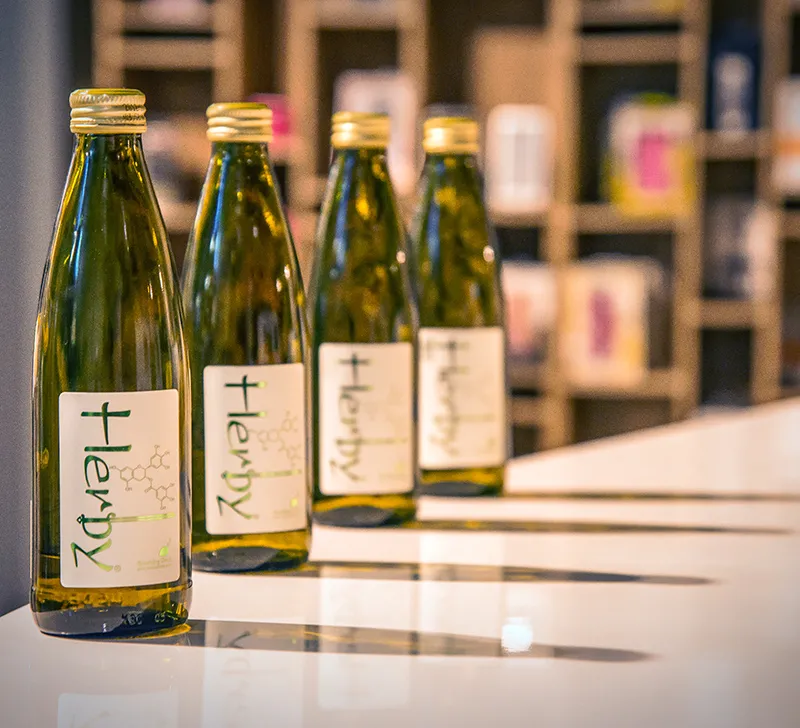
INKBANK Label UV-LED Ink
Fast-curing UV-LED ink for labels and flexible packaging on PET, BOPP, PVC, PE, foil and coated paper.
Factory-direct wholesale pricing · GREENGUARD GOLD / REACH / RoHS compliant
Printheads: KYOCERA KJ-4A · RICOH G5/G6 · EPSON I3200/S3200
Related Resources
Label UV-LED Ink — product specifications and compliance
Coated Paper UV-LED Ink — for paper, cardboard, and packaging applications
Corrugated Box Printing Dye Ink — for corrugated boxes and packaging
Corrugated Pigment Ink — for corrugated board printing
Flexible UV-LED Curable Ink — for flexible media and wrapping applications
Rigid UV-LED Curable Ink — for rigid boards and display graphics
UV-LED Ink Selection Guide 2026 — selection criteria and applications
INKBANK Certifications — GREENGUARD, REACH, RoHS and more
INKBANK Group — Over 20 years of digital inkjet ink R&D and manufacturing. 40,000-ton annual capacity. Products shipped to 100+ countries. GREENGUARD GOLD, REACH, and RoHS compliance available for relevant UV ink product lines. Individual production results may vary based on substrate, equipment, and process parameters.


