 +86 188 1869 1624
 INKBANK01

Which one should you choose? Choose DTF when your shop prints mixed fabrics, dark garments, or short runs and you want one process that handles almost any order. Choose DTG for premium 100% cotton garments where the softest hand feel is the selling point. Choose sublimation for polyester sportswear, all-over prints, and polymer-coated hard goods. If your orders cross fabric types, running DTF plus one of the other two covers nearly every job.
DTF, DTG, and sublimation are often grouped as digital garment printing, but they use different ink chemistry, different fabric limits, and different equipment. This 2026 guide compares cost per print, dark-fabric capability, hand feel, durability, speed, setup, and maintenance, then gives you a simple decision path based on fabric, budget, order volume, and equipment.
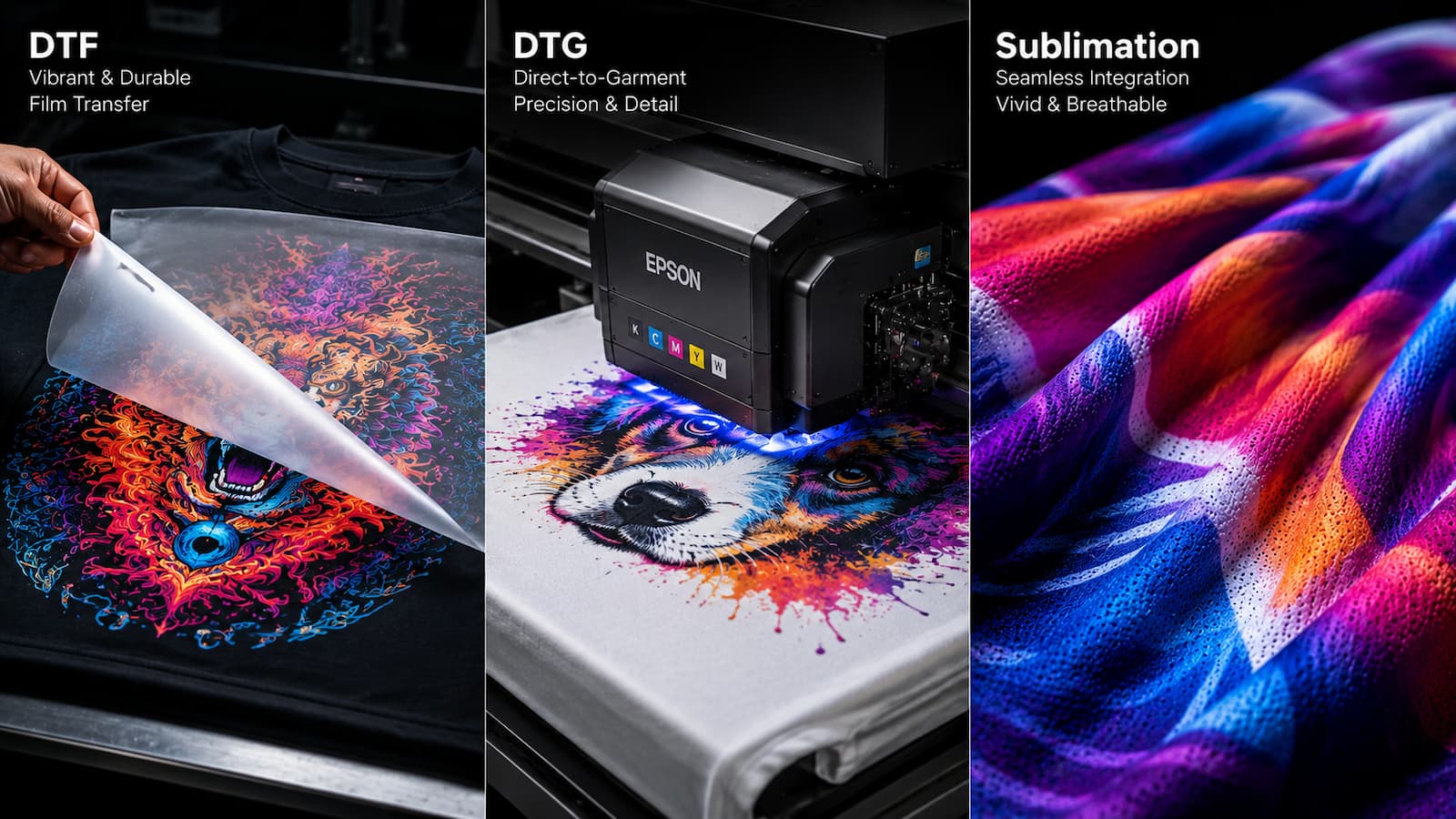
The table below is a quick-reference specification sheet based on typical print shop operation. Actual results vary with ink quality, equipment, fabric, and pressing conditions.
| Dimension | DTF (Direct-to-Film) | DTG (Direct-to-Garment) | Sublimation |
|---|---|---|---|
| Best for | Mixed-fabric custom shops, dark garments, small to medium runs | Premium cotton tees and hoodies where soft hand feel sells | Polyester sportswear, team uniforms, all-over prints, hard goods |
| Fabric compatibility | Cotton, polyester, blends, nylon, denim, canvas, fleece, and other tested fabrics | 100% cotton and cotton-rich blends (80%+ cotton) | 65-100% polyester and polymer-coated hard goods only |
| Dark garments | Excellent - opaque white underbase with no fabric pretreatment | Possible, but pretreatment and white ink make dark cotton process-sensitive | Not possible - sublimation dye is transparent |
| Materials cost per print | $0.50-$1.80 typical (film is the largest consumable cost) | $1.50-$4.00 typical (ink plus pretreatment) | $0.30-$1.00 typical (ink plus transfer paper) |
| Startup equipment | $300-$800 with outsourced transfers plus a heat press; $1,500-$6,000 for entry in-house; $8,000-$18,000 for all-in-one | $10,000-$50,000+ for printer, pretreatment, and curing | $1,000-$3,000 for a full DIY setup with converted printer |
| Hand feel | Medium - a film layer sits on the fabric and softens after washing | Softest on cotton - water-based pigment bonds close to the fiber surface | Zero hand feel - the dye becomes part of the polyester fiber |
| Durability | 50-100+ washes with quality ink, powder, and correct pressing | 30-60 washes; white underbase on dark garments fades sooner | Lasts the life of the garment - no cracking, peeling, or surface wear |
| Setup time per job | 5-10 minutes; no fabric pretreatment | 15-30 minutes with spray, drying, printing, and curing | 5-10 minutes; print paper, press, done |
| Production speed | 20-40 shirts per hour; film can be printed ahead of pressing | 8-30 shirts per hour depending on dark or light garments | 30-50+ items per hour with an efficient workflow |
| Maintenance | Moderate - white ink circulation and regular nozzle checks are required | High - printheads can clog after 48-72 hours idle; pretreatment adds process control | Low - no white ink and no powder make daily upkeep simpler |
| All-over printing | Limited by film size and transfer area | Limited by platen size and seams | Excellent - true edge-to-edge and seam-to-seam on polyester |
| Color and photo detail | High - saturated, opaque colors on any fabric color | Highest on cotton - smooth gradients and photographic detail | Very high on white or light polyester; transparent on dark fabrics |
| Minimum order | 1 piece; gang sheeting supports multiple designs per film | 1 piece, but per-piece time is slow on dark garments | 1 piece; ideal for one-offs and promotional products |
| Typical print shop fit | 1-200 piece orders across many fabric types and colors | 20-200+ cotton garments where softness and detail matter | Polyester teamwear, sportswear brands, and promotional distributors |
Short answer: No. DTG uses water-based pigment ink printed directly onto cotton fibers and cured on the garment surface. Sublimation uses disperse dye that turns into a gas under heat and bonds inside polyester fibers. DTG prints on cotton; sublimation cannot print on cotton. DTG prints sit on the fabric, while sublimation prints become part of the fabric.
DTG: best for 100% cotton and cotton-rich blends, soft touch, photo-real detail, retail garments.
Sublimation: best for 65-100% polyester apparel, all-over prints, and polymer-coated hard goods such as mugs, phone cases, and mouse pads.
Main mistake to avoid: putting sublimation ink into a DTG or DTF printer, or using sublimation transfer on cotton and expecting it to stay.
Short answer: choose DTG for cotton garments that need the softest possible hand feel; choose sublimation for polyester garments that need durability, breathability, or full edge-to-edge coverage. They rarely compete for the same job because their fabric compatibility barely overlaps.
A premium T-shirt brand selling 100% cotton tees should evaluate DTG before sublimation. A teamwear or sportswear producer selling polyester jerseys should evaluate sublimation first. If you print both, running DTG and sublimation side by side is common, and adding DTF gives you coverage for every other job in between.
Short answer: sublimation has the lowest material cost, but only on polyester. For cotton and mixed fabrics, DTF is usually the most economical choice at 1-200 units. DTG has the highest per-print material cost and the highest equipment threshold.
| Cost scenario | DTF | DTG | Sublimation |
|---|---|---|---|
| Materials, typical | $0.50-$1.80 | $1.50-$4.00 | $0.30-$1.00 |
| Startup with outsourced transfer | $300-$800 heat press only | Not available | Not available |
| Full in-house startup | $1,500-$6,000 | $10,000-$50,000+ | $1,000-$3,000 |
| Best volume window | 1-200 mixed-fabric units | 20-200 premium cotton units | 1-1,000+ polyester units |
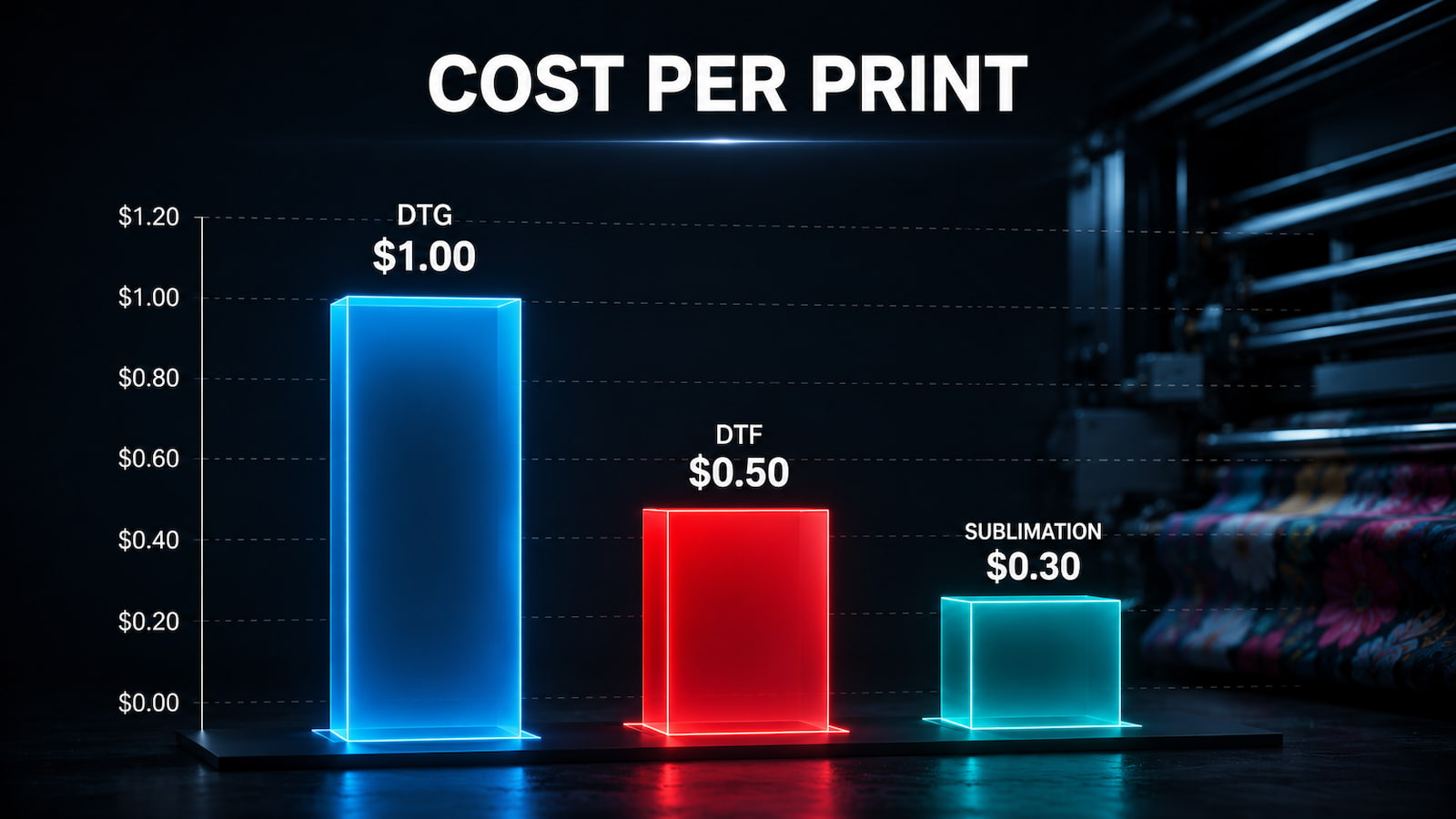
DTF: PET film quality and hot-melt powder directly affect transfer success and wash durability. Low-grade consumables create reprints that erase the apparent savings.
DTG: idle maintenance, pretreatment consistency, and head replacement are the largest hidden costs. Many shops budget $500-$1,500 per year for cleaning and heads.
Sublimation: material cost is low, but quality polyester blanks can cost $1-$2.50 more than similar cotton blanks.
These are industry-estimate ranges, not a quotation. Ask your ink supplier for a cost worksheet based on your actual printer, order sizes, and labor.
Short answer: DTF works on the widest range, DTG works best on cotton-rich fabric, and sublimation works only on polyester or polymer-coated surfaces. Choose the method after checking the blank, not before.
| Fabric | DTF | DTG | Sublimation |
|---|---|---|---|
| 100% cotton | Excellent | Excellent | Not possible |
| 100% polyester | Good | Poor | Excellent |
| 50/50 cotton/poly blend | Excellent | Acceptable | Faded or ghosted |
| Nylon | Good with tested ink | Poor adhesion | Not suitable |
| Denim and canvas | Excellent with firm pressure | Acceptable | Not suitable |
| Dark fabrics | Excellent | Possible with pretreatment | Not possible |
| Mugs, phone cases, mouse pads | Not designed for hard goods | Not designed for hard goods | Excellent |
Short answer: DTF is the most reliable for dark cotton. Its opaque white underbase is printed onto film first, so the design transfers with consistent coverage and needs no fabric pretreatment. DTG can print dark cotton, but the result depends heavily on even pretreatment and white ink saturation. Sublimation cannot print on dark garments because the dye is transparent and would be nearly invisible on black or navy fabric.
Short answer: on cotton, DTG is the softest. On polyester, sublimation has no hand feel at all. DTF is medium and softens after several washes. If your buyer will judge the print by touch, hand feel can matter more than cost. Premium cotton brands often accept DTG's higher cost because the print feels like part of the garment. Promotional and workwear buyers usually accept DTF's slight film texture in exchange for fabric versatility.
Short answer: sublimation is the most durable because the dye is inside the polyester fiber. Quality DTF transfers hold 50-100+ washes with correct pressing. DTG typically holds 30-60 washes, and the white underbase on dark cotton fades faster than the CMYK layer. For durable cotton prints, choose a tested DTF pigment ink and hot-melt powder system; for polyester, sublimation is effectively permanent.
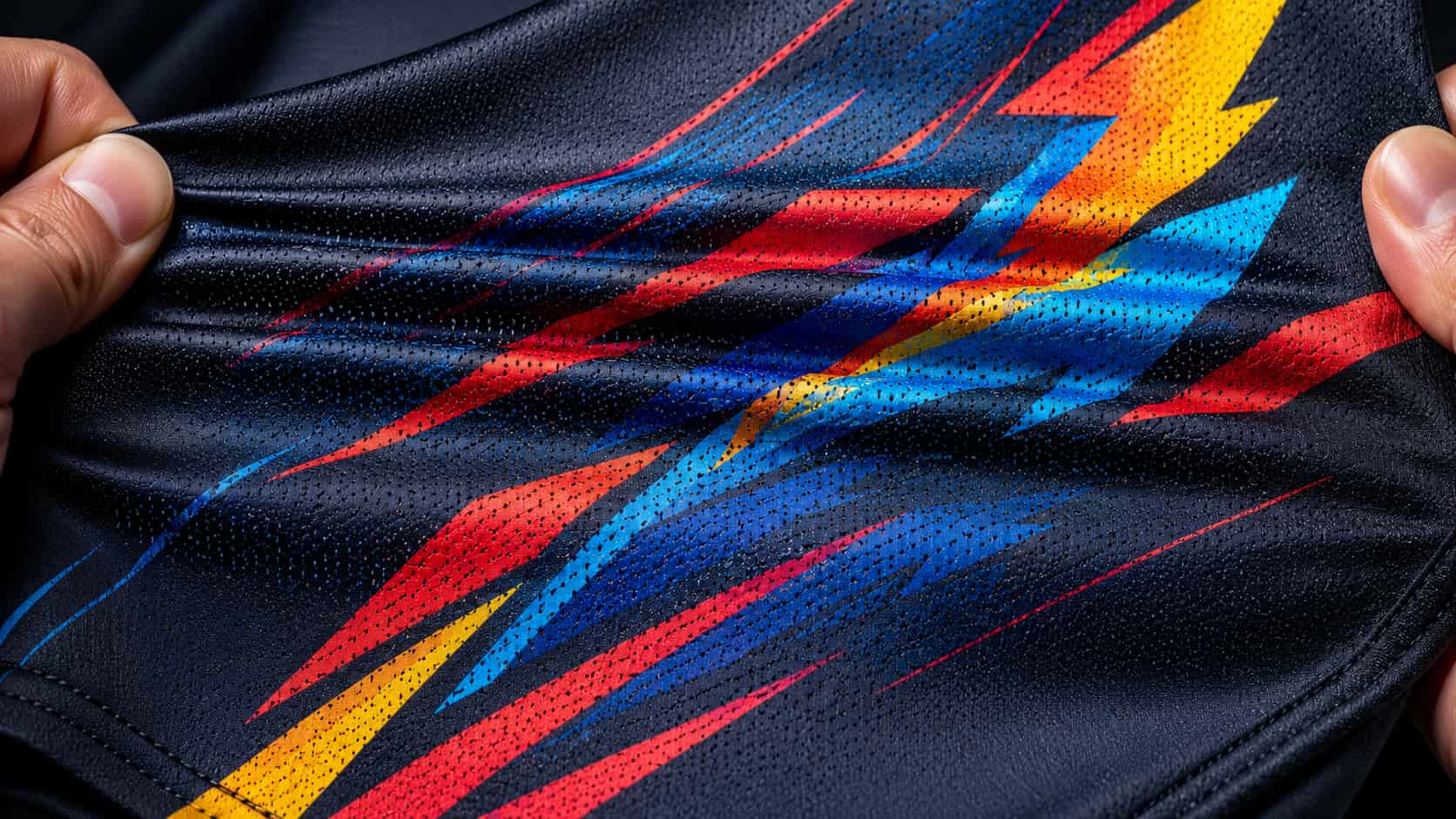
Short answer: the lowest-cost start is DTF with outsourced transfers and a heat press, then build in-house printing once volume justifies it. The highest-cost start is DTG. Sublimation is the cheapest full in-house system but locks you into polyester.
DTF: heat press ($300-$800) to start; add DTF printer, film, ink, powder, powder shaker, and curing when you produce in-house.
DTG: printer, automated or manual pretreatment, drying and curing, plus humidity control. Plan for process training.
Sublimation: sublimation printer or converted inkjet, transfer paper, sublimation ink, and heat press; add mug, cap, or other specialty presses only when you sell those products.
Use this decision path instead of picking a method by reputation. It is built around the three factors that determine profitability: fabric mix, order size, and operating capacity.
If most of your volume is polyester sportswear, uniforms, or hard goods, make sublimation your primary method.
If you sell premium 100% cotton garments and hand feel is your brand promise, make DTG your primary method.
If you take mixed cotton, polyester, blends, dark, denim, or nylon orders, make DTF your primary method.
For 1-200 custom mixed-fabric pieces, DTF is usually the best total-cost balance; use outsourced transfers before buying a printer.
For 200+ identical polyester pieces, sublimation becomes more competitive as materials scale.
For 20-200 premium cotton pieces where softness is the differentiator, DTG earns its higher per-print cost.
DTG needs disciplined daily use or automated cleaning, plus pretreatment consistency.
DTF needs white ink circulation management and regular nozzle checks.
Sublimation is the least demanding to keep running, making it a good first in-house system for a new shop on polyester.
Choose DTF if you print on multiple fabrics, receive dark-garment orders, and want one process with a low entry point. Explore INKBANK DTF pigment ink.
Choose DTG if your catalog is 100% cotton or cotton-rich and soft touch drives your price. Explore INKBANK DTG pigment ink.
Choose sublimation if your products are polyester or polymer-coated and you need durable, texture-free prints. Explore INKBANK ultra-high-concentration sublimation ink.
Short answer: yes, and most growing shops do. DTF plus sublimation is the most common combination because it covers cotton, blends, dark garments, polyester sportswear, and hard goods. DTF plus DTG works when a shop wants both fabric versatility and premium cotton softness. The key is to keep each workflow separate: inks, printheads, and curing profiles are not interchangeable.
As an ink buyer, compare suppliers on test data, not only price. The questions below are the same ones INKBANK's technical team asks when a customer sends a new printhead or fabric.
Printhead compatibility: ask for confirmed formulations for your exact Epson, Ricoh, Kyocera, or other printhead.
Wash and rub data: request wet and dry rubbing grades, wash fastness, and stretch or cold-crack results.
White ink behavior for DTF: check sedimentation, circulation performance, and clog recovery, not just printed opacity.
Certifications: confirm OEKO-TEX ECO PASSPORT, GOTS, or ZDHC MRSL compliance when your customers require it.
Batch consistency: ask how the supplier controls color, viscosity, and particle size from batch to batch.
Support: evaluate response time, documentation, sample policy, and whether the manufacturer can do OEM or private label supply.
No. DTG prints water-based pigment ink onto cotton and cures it on the garment surface. Sublimation converts disperse dye into gas that bonds inside polyester fibers. DTG works on cotton; sublimation only works on polyester or polymer-coated materials.
It depends on your fabric mix. DTF is better for mixed fabrics, dark garments, and short runs because one process covers nearly any blank. DTG is better when your products are premium 100% cotton and the softest possible hand feel is your selling point.
Sublimation has lower material cost, but it only prints polyester and light polymer-coated products. On cotton and mixed fabrics, DTF is usually cheaper per finished garment because it handles the widest range of jobs without pretreatment.
No. Sublimation dye cannot bond with natural cotton fibers, so the image fades or washes out. Cotton and cotton-blend products need DTF or DTG pigment ink.
DTF is the most reliable for dark t-shirts because its white underbase is opaque and needs no fabric pretreatment. DTG can work on dark cotton but is process-sensitive. Sublimation cannot print on dark garments because its dye is transparent.
Quality DTF prints typically survive 50-100+ washes when the ink, hot-melt powder, and heat-press parameters are correct. Test results vary by fabric, wash method, and ink formulation, so request lab data from your supplier.
Sublimation is best for polyester sportswear because the print has zero hand feel, does not crack or peel, and can cover the full garment. DTF is an option for smaller polyester orders, but it adds a surface layer and cannot match sublimation for all-over coverage.
No. Sublimation ink and DTF pigment ink have different chemistry, carrier systems, and curing requirements. Using the wrong ink can damage printheads and cause poor adhesion or washout. Buy the correct ink system for each printer and label them clearly.
DTF is taking over many short-run and mixed-fabric jobs because it has a lower entry cost, works on more fabrics, and needs no pretreatment. DTG remains valuable for premium light and dark cotton garments where soft hand feel and photographic detail justify the higher cost.
Send INKBANK your fabric mix, printer model, and target order sizes. Our technical team can recommend a DTF, DTG, or sublimation ink system and arrange test samples for qualified inquiries.
Get Free Technical Consultation | Find an INKBANK Distributor
Contact Us
Hello, welcome to submit any questions and suggestions. We will reply to you as soon as possible. Thank you for your support and help.


